

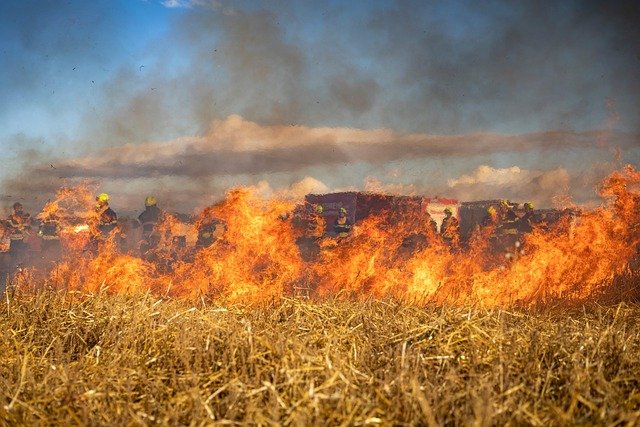
A dramatic wildfire erupted on Edinburgh’s iconic Arthur Seat yesterday evening, sending plumes of smoke across Scotland’s capital during one of its busiest tourist periods. The blaze on the ancient volcano has highlighted the vulnerability of the UK’s most cherished landmarks to extreme weather conditions.
Fire Engulfs Edinburgh’s Most Famous Peak
The Scottish Fire and Rescue Service received reports of a gorse fire at Arthur Seat at 4:05 PM on Sunday, 10 August. Within an hour, thick smoke was billowing across Edinburgh’s city centre, visible from miles away as flames spread rapidly across the beloved landmark.
Four fire appliances and specialist resources were mobilised to tackle the blaze affecting a large area of gorse on the 822-foot extinct volcano. The fire service confirmed that crews remain at the scene with no reported casualties at this time.
Eyewitnesses described scenes of people “running down the face of the hill to get away from it” as smoke spread rapidly across the eastern side of Arthur Seat. Police Scotland immediately advised motorists and pedestrians to avoid the area, whilst football fans attending the nearby Hibernian versus Kilmarnock match were instructed to avoid the Willowbrae, Duddingston and Holyrood routes when leaving Easter Road stadium.
Ancient Volcano at Heart of Scotland’s Capital
Arthur Seat stands as Edinburgh’s highest point at 251 metres above sea level, formed by volcanic activity over 350 million years ago during the Carboniferous period. The extinct volcano sits within the 640-acre Holyrood Park at the foot of the Royal Mile, offering some of Scotland’s most spectacular urban views.
The landmark holds immense geological significance as a Site of Special Scientific Interest. James Hutton, the “father of modern geology,” used Arthur Seat’s rock formations in the 18th century to support his groundbreaking theories about Earth’s ancient history.
For visitors, Arthur Seat represents more than geological wonder. The moderate climb takes between 45 minutes to two hours depending on the route chosen, rewarding hikers with panoramic views across Edinburgh’s Old Town, New Town, Edinburgh Castle, the Firth of Forth, and beyond to Fife.
Tourism Industry Faces Peak Season Disruption
The timing of this wildfire could not be more challenging for Edinburgh’s tourism sector. August represents the city’s busiest month, when the population swells to over one million visitors during the world-renowned festival season. The city welcomes over 4 million tourists annually, with the economic impact reaching £1.3 billion and supporting 30,000 jobs.
Five major festivals run simultaneously throughout August, including the Edinburgh International Festival, the Edinburgh Festival Fringe, and the Royal Military Tattoo. These events attract audiences of more than 4.5 million, putting them on par with the FIFA World Cup for ticket sales.
Arthur Seat ranks among Scotland’s top visitor attractions, with tourists regularly making the climb part of their Edinburgh experience. The landmark sits alongside Edinburgh Castle and the Royal Mile as one of the city’s most photographed locations.
Part of Wider UK Wildfire Pattern
This incident forms part of a broader pattern of wildfires affecting the UK throughout 2025. Scotland has experienced what fire services describe as “the largest wildfires Scotland has ever seen” during an exceptionally warm and dry summer.
The 2025 wildfire season has seen blazes across multiple regions, from the Highlands to urban areas. The Arthur Seat fire joins a growing list of incidents affecting tourist destinations and natural landmarks across Britain.
Climate conditions this summer have created ideal circumstances for wildfire spread. The combination of dry vegetation, warm temperatures, and occasional strong winds has left many of Britain’s cherished landscapes vulnerable to rapid fire spread.
Impact on Edinburgh’s Festival Economy
The disruption comes at a critical time for Edinburgh’s visitor economy. August generates significant revenue for hotels, restaurants, attractions, and transport providers across the city. International visitors alone spend over £1 billion annually in Edinburgh, with August representing the peak earning period.
The city’s accommodation sector faces particular pressure during festival season, with occupancy rates typically reaching capacity. Many visitors plan their trips around Arthur’s Seat climbs, combining the natural experience with cultural events across the city.
Local businesses report that Arthur Seat visits often extend tourist stays, with many visitors returning multiple times to experience different routes and lighting conditions. The landmark serves as a natural counterbalance to the festival crowds, offering space and tranquillity within the urban environment.
Emergency Response and Recovery
The Scottish Fire and Rescue Service’s swift response prevented the blaze from spreading to adjacent areas or structures. Operations Control mobilised four fire appliances and specialist wildfire resources to contain the gorse fire.
The service advised members of the public to stop calling about the incident once crews were in attendance, indicating the scale of concern from Edinburgh residents and visitors. No injuries have been reported, though authorities continue monitoring the situation.
Holyrood Park, managed by Historic Environment Scotland, encompasses not only Arthur Seat but also the Salisbury Crags and Dunsapie Loch. The park’s diverse ecosystem includes rare plant species and wildlife habitats that could face long-term impact from fire damage.
Looking Forward
As Edinburgh’s fire crews work to fully extinguish the blaze, questions arise about protecting the UK’s most vulnerable natural attractions from increasing wildfire risk. Arthur’s Seat’s position as both a geological treasure and major tourist draw makes its preservation crucial for Scotland’s heritage and economy.
The incident underscores the challenges facing popular outdoor attractions during periods of extreme weather. With climate change contributing to more frequent wildfire conditions, landmark sites across Britain may need enhanced protection strategies.
For now, Edinburgh’s tourism industry awaits assessment of any lasting damage to one of its most iconic attractions. The resilience of Arthur’s Seat, shaped by 350 million years of geological change, offers hope that this ancient volcano will weather another challenge and continue welcoming visitors for generations to come.
The cause of the Arthur’s Seat wildfire remains under investigation. Visitors are advised to check with local authorities before planning climbs while recovery efforts continue.
Read More: Electric Cars Transforming Britain’s Transport Future
